A multi-channel marketing platform should do four things: bring campaign data from every ad channel into one workspace, track budget and spend across channels, compare performance side by side, and show which channel works best for each audience. Without those, each channel is judged in its own tool and budget decisions wait for the reporting cycle.
What Is a Multi-Channel Marketing Platform?
A multi channel marketing platform is a software solution that enables you to manage paid search, social media advertising, email, display, and programmatic campaigns from a single interface. Rather than logging into Google Ads, Meta Business Manager, LinkedIn Campaign Manager, and your email tool separately every morning, a unified platform connects all of these channels. This ensures your team operates from one shared source of truth. The goal is not simply convenience but rather the elimination of data silos that distort marketing decisions and significantly slow down campaign optimization cycles. In essence, these platforms provide a consolidated view of your marketing data by preventing performance metrics from being trapped in separate channels.
The distinction between a basic marketing tool and a genuine multi channel platform lies in the depth of integration. A capable platform pulls raw data from each ad platform directly and puts the results side by side in one consolidated report. According to State of Marketing Report from Salesforce, high-performing marketing teams are far more likely to use integrated platforms that unify customer data compared to lower-performing teams. This demonstrates that centralized operations are a strategic advantage with a direct impact on business outcomes.
Why does unified campaign management matter across channels?
One of the core features of a multi-channel marketing platform is the unified management layer. This allows you to collect your advertising performance from different platforms in a single workspace to monitor all processes and optimize budget management easily. When the campaign process runs separately for each channel, teams have to do the same tasks over and over again and spend disjointed effort on every single platform.
Preparing separate briefs, applying different tracking codes, and manually consolidating reports leads to significant time loss and operational fatigue. A centralized management structure eliminates this manual overhead and allows the team to focus their time directly on strategy and growth instead of manual tasks.
How should a platform track budget and spend across channels?
Budget mismanagement is one of the most common and costly pain points for marketing teams working across multiple channels. When spend data lives in different platforms, it is nearly impossible to know in real time whether your total campaign budget is being consumed efficiently. One channel may be overspending while another underdelivers, and neither team is aware until the reporting cycle closes. A capable multi-channel marketing platform shows budget allocation in one place, so you can compare spend against plan and see which channel is pacing ahead or behind.
The table below illustrates a simplified budget distribution model that a centralized platform makes visible at a glance:
Channel | Allocated Budget | Spend to Date | Remaining | % of Total |
Google Search | $8,000 | $5,200 | $2,800 | 40% |
Meta Ads | $6,000 | $4,100 | $1,900 | 30% |
LinkedIn Ads | $4,000 | $2,300 | $1,700 | 20% |
Retargeting | $2,000 | $900 | $1,100 | 10% |
Total | $20,000 | $12,500 | $7,500 | 100% |
Without a centralized platform, the marketing manager would need to log into four separate tools, export data, and manually compile this table in a spreadsheet that is already outdated. This turns budget management from a guesswork exercise into a data-driven process that ensures every dollar is working toward the stated business goals.
Why compare performance across platforms in one report?
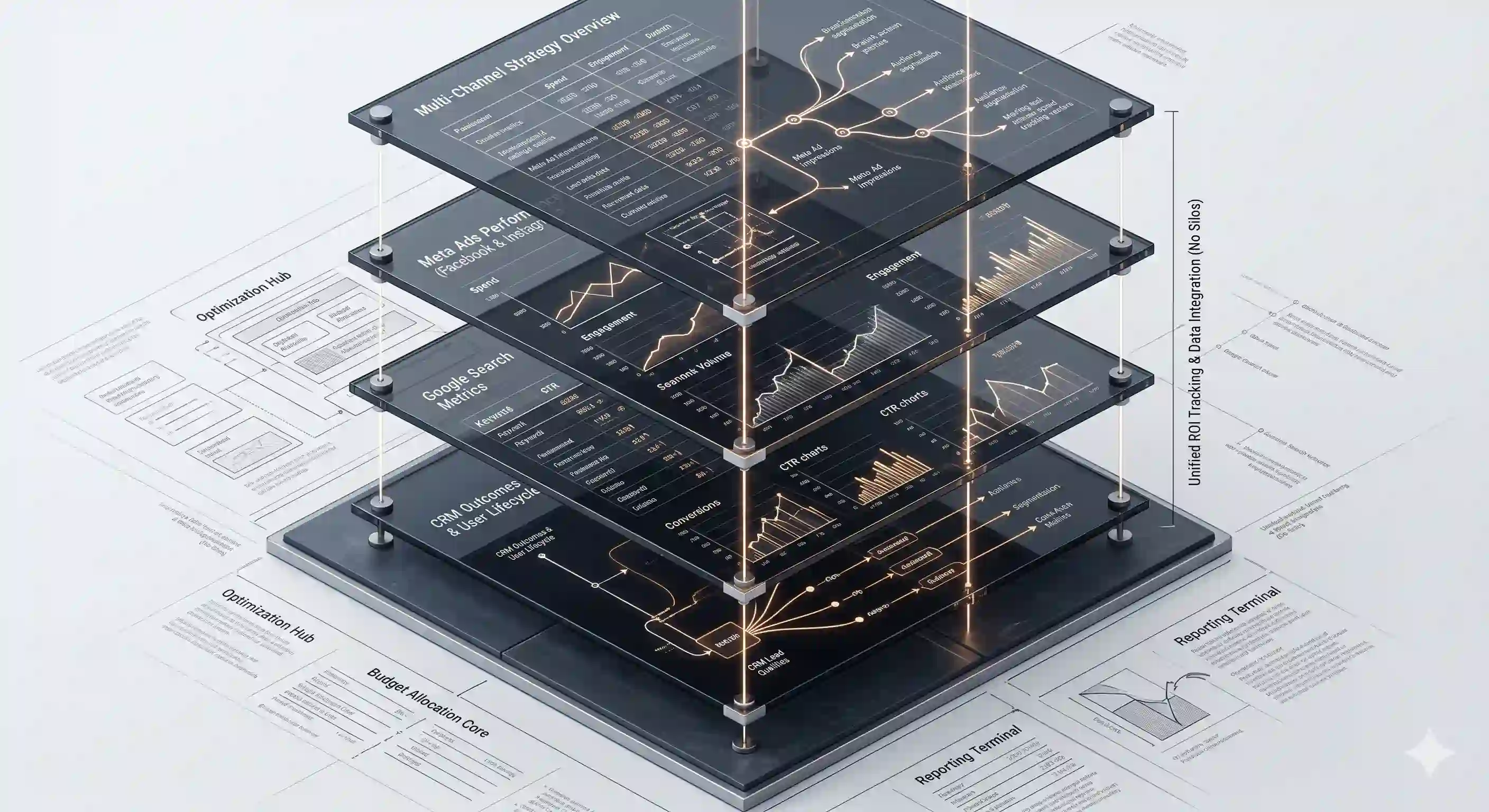
Analytics is where the real power of a multi-channel marketing platform becomes undeniable. While individual channel reporting tools like Google Analytics or Meta Insights provide strong data within their own ecosystems, they do not allow for easy side-by-side comparison. Cross-platform analytics allows you to see how the same creative or campaign is performing across different platforms at the same time. This visibility enables you to instantly identify which platform is delivering the highest efficiency for your specific message and update your strategy accordingly.
When you can clearly see that LinkedIn generates the highest-quality leads but at a higher cost per acquisition than Google Search, you can present a data-backed case for adjusting your channel mix. Because each platform counts conversions with its own attribution settings, comparing channels in one neutral view is especially useful. These analytical insights allow you to understand the true ROI of your marketing investments.
How do you see which channel works best for each audience?
Knowing your target audience is not enough; the real key is seeing which platform delivers the best results for those audiences. A multi-channel marketing platform allows you to compare audience performance across different channels side-by-side to understand where each segment works best. This way, you can shift your budget toward audiences that bring high-quality results instead of getting lost in each platform's native data. Centralized audience visibility serves as a strategic guide to directly optimize ad spend efficiency. Marketers can instantly evaluate whether high-intent segments like pricing page visitors convert faster via Meta Ads or Google Search. This data shows where to move budget away from underperforming channels. Such an analytical process increases your ad relevance while protecting your budget from being wasted on the wrong platforms. Ultimately, audience-based performance tracking takes the guesswork out of budget management and improves your operational success by relying on actual data.
What do teams gain from centralizing marketing data?
Centralizing campaign, budget and performance data gives a team more than efficiency: it decides faster than teams split across disconnected tools. Marketing managers who can see the full picture in real time make better decisions faster. Directors who can trace budget to business outcomes with confidence earn greater organizational trust and larger future budgets. Specialists freed from manual data gathering can invest their time in creative strategy, audience testing, and campaign optimization. Centralization does not remove the need for skilled people, but it instead multiplies what skilled people can accomplish within the same working hours.
Frequently Asked Questions
What is the difference between a multi-channel and an omnichannel marketing platform?
Multi-channel marketing means reaching customers across several different channels like search, social media, email, and display. Omnichannel goes one step further by connecting those channels into one continuous customer experience. A multi-channel platform may manage each channel independently, whereas a true omnichannel approach ensures that a user's interaction on one channel directly influences what they encounter on the next. For most performance marketing teams, a strong multi-channel platform with cross-platform analytics covers the majority of strategic needs while omnichannel orchestration is added later.
How many channels should a multi-channel marketing platform support?
While there is no single universal answer, the practical minimum capacity for most B2B and B2C brands today covers certain standards. Paid search channels, social media advertising platforms, programmatic display areas, and CRM integrations are among the essentials of a platform. The ideal platform must support the specific channels where your target audience is active and your budget is concentrated. Before selection, check which channels drive most of your conversions and confirm the platform has an API-based native integration for each of them.
Can a small marketing team benefit from a multi-channel marketing platform?
Absolutely, and small to medium-sized teams often see the greatest benefit from these platforms. This is because these teams usually do not have separate specialists for each channel and their time to manually consolidate fragmented data is very limited. A unified platform allows a team of just two or three people to manage five or six different channels with the same level of oversight and control that would normally require a much larger staff. The critical point here is choosing a platform with an interface that matches your team's technical level. Therefore, it becomes the most logical step to choose solutions that offer a pricing model scaling with your actual usage.
What should I look for when evaluating a multi-channel marketing platform?
The primary criteria you should consider when selecting a multi channel marketing platform are as follows. The number of Directly Integrated Channels (pulling raw data directly from ad sources without any intermediaries), the quality of Cross-Platform Reporting (the ability to see campaign results from different platforms side-by-side in a single view), and the depth of Granular Budget Controls (tracking spending limits and budget distribution at a very detailed level) are at the top of this list. During the selection process, it is of great importance to request a live demonstration using your own actual campaign data instead of pre-prepared demo environments provided by vendors.
You specifically need to pay attention to the platform's approach to Data Discrepancy Handling (how it manages and explains the differences between its own data and the native platform data) as many tools fall short in this area. A platform that transparently addresses and maps data variances instead of masking or artificially smoothing them provides the data integrity required for accurate performance marketing decisions. Ultimately, choosing the right platform allows you to understand the true return on your marketing investments more transparently and ensures that you manage your budget in the most efficient way possible.
