Creative optimization means testing ad creatives against one clear goal, reading CTR, conversion rate, hook rate and hold rate together, and refreshing creatives before frequency-driven fatigue sets in. On Meta and TikTok, early creative signals such as viewing in the first three seconds also shape how the platform delivers the ad.
In the fast-paced world of digital marketing, creative has become the new targeting. As we step into 2025, creative optimization takes center stage, empowering marketers to refine their ad strategies and boost performance. With rapid advancements in technology and evolving audience preferences, understanding and applying the right creative optimization strategies has never been more important. This guide will walk you through the latest trends, best practices, and cutting-edge techniques that will help you maximize your ad performance this year.
Modern advertising platforms have become incredibly sophisticated in how they process and respond to creative performance signals. Each creative decision you make doesn't just impact how humans perceive your ads—it directly influences how platforms like Meta and TikTok's algorithms understand and distribute your content. When a video ad starts playing, platforms measure much more than view time. They're analyzing:
Viewer behavior in the first three seconds
Pattern of engagement throughout the video
Sound-on versus sound-off viewing
Completion rates across different audience segments
Post-view actions and conversion patterns
These signals then influence not just that specific ad's performance, but how the platform will treat your future campaigns. Strong early performance signals can lead to:
Lower CPMs across your account
Broader audience reach
More favorable ad placement
Better overall campaign scalability
What is creative optimization?
Creative optimization is the practice of refining and enhancing the elements of your digital ads to maximize their effectiveness. At its core, this process involves testing, tweaking, and analyzing ad creatives—whether images, videos, copy, or even formats—to ensure they resonate with your target audience.
With the rapid pace of change in the digital marketing landscape, understanding what drives engagement and performance is crucial. By adopting creative optimization techniques, you can align your campaigns with your audience's needs, improving everything from click-through rates to conversions. Whether you’re a seasoned marketer or new to the field, mastering creative optimization can elevate your campaigns and help you stay competitive in a crowded market.
How does creative testing work?
Creative testing is the backbone of any effective creative optimization strategy. It involves systematically experimenting with different elements of your ads to determine which combinations drive the best results. Through testing, you can uncover insights into your audience’s preferences and behaviors, allowing you to create more personalized and impactful campaigns.

What is Creative Testing?
At its simplest, creative testing refers to the process of comparing multiple variations of your ad creatives to find the most effective one. There are several methods of creative testing, each designed to offer different insights:
A/B Testing: This method compares two versions of an ad to see which performs better. The variations could differ in a single element, such as the headline, image, or call to action.
Multivariate Testing: A more advanced technique, multivariate testing compares multiple elements at once, allowing you to identify which combination of factors (headlines, images, etc.) performs the best.
User Testing: This type of testing goes beyond just analyzing the performance of ads. It involves getting feedback directly from your audience to understand what resonates with them on a deeper level.
Benefits of Creative Testing
Creative testing provides numerous benefits, especially when it comes to improving your ad performance:
Improved Ad Performance: By identifying which creatives generate the highest engagement, you can optimize your campaigns for better performance.
Reduced Costs: Testing allows you to allocate your budget more efficiently by focusing on the most effective ads, ultimately reducing wasted spend.
Better Audience Understanding: Through testing, you gain valuable insights into what your audience truly values, helping you refine your targeting and creative strategies.
Which creative optimization techniques work best?
Creative optimization is not a one-size-fits-all process. It means refining your approach with data and testing new ideas continuously.
Best Practices for Creative Optimization
To build a solid foundation for your creative optimization strategy, start with these essential best practices:
Set Clear Goals: Before you dive into testing, make sure you have a clear understanding of what success looks like. Are you aiming for more clicks, higher conversions, or better engagement? Defining specific goals helps you stay focused and measure your success effectively.
If you’re running an e-commerce ad, your goal might be to increase conversions (purchases) rather than just clicks. If you’re promoting brand awareness, you might focus more on engagement metrics like comments and shares.
Segment Your Audience: Not all users are the same, and your creatives should reflect that. By segmenting your audience based on demographics, interests, behaviors, and more, you can create more tailored and relevant ads that resonate with each group.
For a skincare brand, you could create separate ads targeting different age groups (18-24, 25-35, 36-45) with tailored messaging for each group’s specific skin concerns.
Evaluate Test Results: Creative optimization isn’t just about testing—it’s about analyzing and understanding the results. Take the time to review which creatives are performing well and why. Use this data to adjust your strategy and improve future campaigns.
If your video ad has a high CTR but a low conversion rate, it might indicate that the message is attractive but the call-to-action (CTA) isn’t compelling enough. In that case, tweaking the CTA to be more direct or urgent could improve conversion rates.
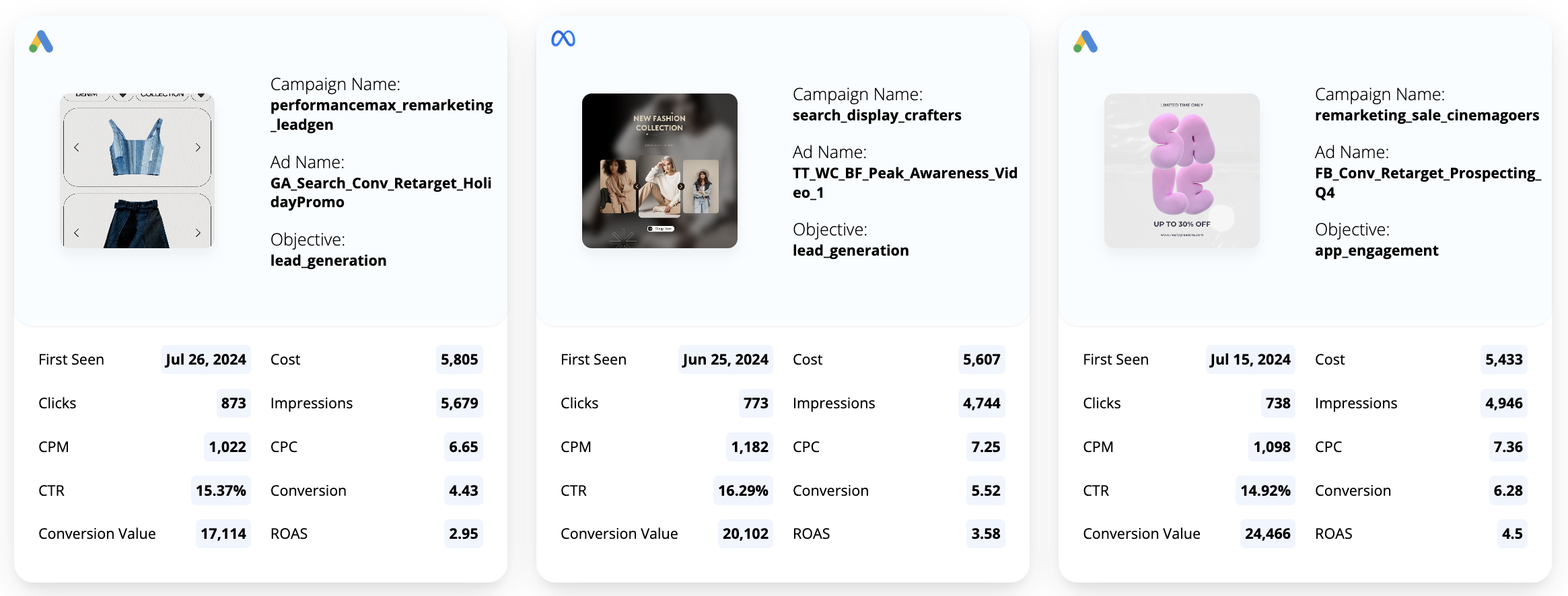
Advanced Techniques
Once the basics are in place, test these advanced techniques:
AI in Creative Development: AI tools now help teams draft concepts, generate variations and personalize ads faster, but every AI-made variation still has to earn its budget in a test.
Sound-First Approach: With the rise of video content, particularly on platforms like TikTok, a sound-first approach is becoming crucial. Ads that engage users through audio can significantly improve user retention and overall ad effectiveness, especially in mobile environments where sound plays a central role.
Creative Diversification: As the digital landscape continues to evolve, it’s important to diversify your creatives. Testing various formats (such as carousel ads, video, and static images) and exploring different channels (social media, search, email) ensures that you reach your audience in the most impactful way possible.
Utilize a Wide Range of Creative Formats: Incorporate a mix of static images, videos, carousels, UGC, and high-production content to engage different audience segments effectively. Ensure each format serves a distinct purpose in your campaigns.
Prioritize Frequent Testing with High Volume: Keep a steady flow of new creatives in Advantage+ campaigns so the system has enough variety to find what works. Launch multiple variations (e.g., hooks, visuals, messaging) to identify top-performing strategies.
Balance Iterative and Net New Creativity: Put most of your effort into net new creatives and keep iterative testing for proven top performers to extend their lifespan.
Audit and Refresh Creatives Regularly: Use tools like Meta’s worksheets or the “squint test” to evaluate creative diversity. Look for visual and messaging variations, ensuring your creatives do not rely heavily on similar themes or formats.
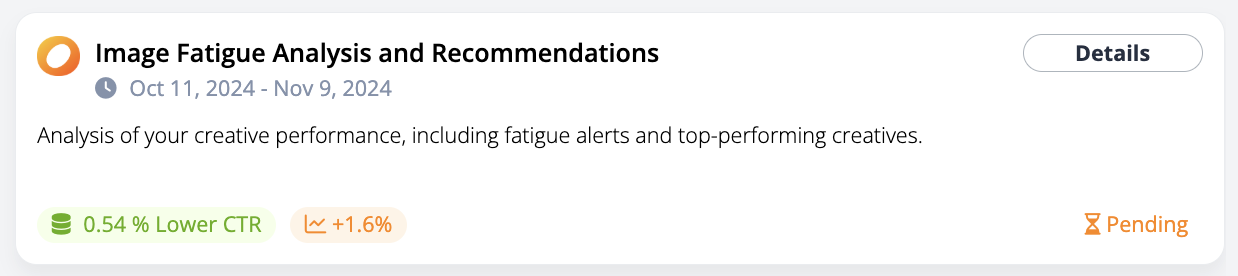
How do you analyze creative performance and spot fatigue?
Creative optimization doesn’t end once you launch your ads. The real magic happens through continuous analysis and iteration. By carefully monitoring performance data, identifying areas for improvement, and making adjustments, you can ensure your campaigns remain effective over time.
Performance Data
The first step in analyzing creative performance is gathering data. This includes:
Click-Through Rate (CTR): A high CTR indicates that your ad is catching your audience’s attention. If your CTR is low, it may be time to test different creatives or tweak your targeting. (CTR = (Total Clicks / Total Impressions) * 100)
Conversion Rate: While a high CTR is good, a high conversion rate is what ultimately matters. This metric shows how well your ad is driving users to take the desired action (e.g., making a purchase, signing up, etc.) (Conversion Rate = (Total Conversions / Total Clicks) * 100)
Engagement Metrics: Depending on your campaign goal, engagement metrics like comments, shares, and likes can also offer valuable insights into how well your ad is resonating with your audience. (Engagement Rate = (Total Engagements / Total Impressions) * 100)
Hook Rate: A strong hook rate means your ad is capturing attention right off the bat. If your hook rate is low, you might need to refine your opening moments to make them more compelling and irresistible. (Hook Rate = (Number of Viewers Who Continue Watching After First 3 Seconds / Total Views) * 100)
Hold Rate: A high hold rate shows that your audience is sticking around for the entire ad. If your hold rate is low, it's time to rework the content to ensure viewers stay engaged from start to finish. (Hold Rate = (Number of Viewers Who Watch Entire Ad / Total Views) * 100)
Creative Fatigue
Even the best-performing ads can experience creative fatigue, where engagement starts to decline after a certain period. This can happen when your audience has seen the same ad too many times, causing them to lose interest. To combat creative fatigue:
Monitor Ad Frequency: Keep an eye on how often your ads are being shown to the same users. If frequency starts to climb too high, it might be time to rotate in fresh creatives.
Refresh Your Creatives Regularly: Use data to identify which creatives are starting to show signs of fatigue. By constantly refreshing your ads with new designs, messaging, or formats, you can keep your campaigns feeling fresh and engaging.
Experiment with Variations: If an ad is still performing well but starting to show signs of fatigue, consider testing variations. Small changes to the visuals, copy, or targeting can help breathe new life into an ad without having to start from scratch.
Iteration for Long-Term Success
Optimization is an ongoing process. After analyzing your creative performance, use the insights gathered to iterate and improve. Whether it’s tweaking a headline, adjusting an image, or refining your targeting, even small changes can lead to significant improvements in performance.
By committing to constant analysis and iteration, you ensure that your ads remain relevant and effective throughout the campaign. Over time, this will help you build a more efficient and results-driven creative strategy.
Which creative trends are worth testing now?
These creative trends are worth testing now:
AI Across the Creative Process: AI now shows up at every stage of creative development. It’s being used not only to generate ideas and scripts but also to tailor content for different personas and tweak tone for diverse audience segments. Marketers are using AI to quickly iterate on creative concepts, making it easier than ever to test and refine messages in real-time.
AI-Generated Voices and Virtual Talent: The rise of AI-generated voices and simulated talent is transforming how brands approach media buying. With AI-created voices, brands can roll out new ad iterations in a matter of minutes, bypassing lengthy creative cycles. Additionally, AI-generated faces and virtual talent open up new possibilities for testing different personas, providing an innovative and cost-effective way to experiment.
Mastering Short-Form Vertical Video: Short-form vertical video on TikTok, Instagram Reels and YouTube Shorts is a core paid social format. These formats reach users with short content built for mobile, and one well-made vertical video can run on all three platforms.
Thumbnail Split-Testing for Maximum Impact: Thumbnail split-testing is an often overlooked technique. Many media buyers neglect to manually select or upload custom thumbnails, yet this seemingly minor detail can significantly impact a campaign's success. A/B testing thumbnails is a low-cost test worth adding to your plan.
First Frame Retention is Key: For auto-play video ads, capturing attention within the first few milliseconds is crucial. This microsecond of retention can have a profound impact on ad performance, so it’s essential to optimize for first-frame engagement. Track first-frame retention for every auto-play video, because a viewer who scrolls past the first frame never sees the message.
Success will come from balancing automation and human insight, maintaining flexible systems while establishing stable processes, and continuously evolving while maintaining performance stability.
Remember: The goal isn't just to optimize individual campaigns but to build sustainable systems that can deliver consistent performance improvements over time while adapting to platform changes and market evolution.
