First-party data is information you collect directly from customers through channels you own, such as your website, app, email interactions, CRM and purchase history. Because it comes from real customer behavior on channels you control, it is the most reliable basis for segmentation, retargeting known customers in Google Ads and Meta Ads, and personalization.
In today's digital landscape, data is the foundation of effective marketing. However, with growing concerns about privacy, third-party cookie deprecation, and increasing regulations, businesses must shift towards first-party data to drive their marketing strategies.
First-party data refers to information collected directly from customers through owned channels, such as websites, apps, email interactions, and CRM systems. Unlike third-party data, which comes from external sources, first-party data is more accurate, reliable, and privacy-compliant—making it an essential asset for personalization, audience segmentation, and long-term business success.
What is First-Party Data?
First-party data refers to data collected directly from users through interactions with a brand’s owned channels, such as websites, mobile apps, CRM systems, email campaigns, and customer surveys. Unlike second-party or third-party data, first-party data is collected with the user's consent, making it more reliable, accurate, and privacy-compliant.
Key Characteristics of First-Party Data
Collected Directly from Users – Comes from direct customer interactions, ensuring high data accuracy.
Owned and Controlled by the Business – Businesses do not rely on external vendors for this data.
Privacy-Compliant – Users voluntarily share their data, making it easier to comply with GDPR, CCPA, and other privacy laws.
High-Quality and Actionable – First-party data reflects real customer behaviors and preferences, making it ideal for personalized marketing and customer segmentation.
Examples of First-Party Data Sources
Businesses collect first-party data from various sources, including:
Website & App Analytics – User behavior tracking, session duration, product views, and purchase history.
Email & CRM Interactions – Open rates, click-through rates, and past customer engagement.
Customer Surveys & Feedback Forms – Direct responses from customers regarding preferences and satisfaction.
Purchase & Transaction History – Data on past orders, cart abandonment, and product preferences.
Loyalty Programs & Memberships – Customer participation in rewards programs and repeat purchase patterns.
How First-Party Data Differs from Second- and Third-Party Data
Second-Party Data – Data collected by another company but shared with a business through partnerships (e.g., retailers sharing purchase data with suppliers).
Third-Party Data – Purchased from external providers who aggregate data from multiple sources (e.g., ad networks, data brokers).
First-Party Data – The most valuable and trustworthy because it is collected directly from customers.
First-party data is the foundation for data-driven marketing because it provides real, consented insights into customer behavior. Unlike third-party data, which is becoming less accessible due to privacy regulations and cookie restrictions, first-party data offers a future-proof approach for businesses looking to improve personalization, targeting, and customer relationships.
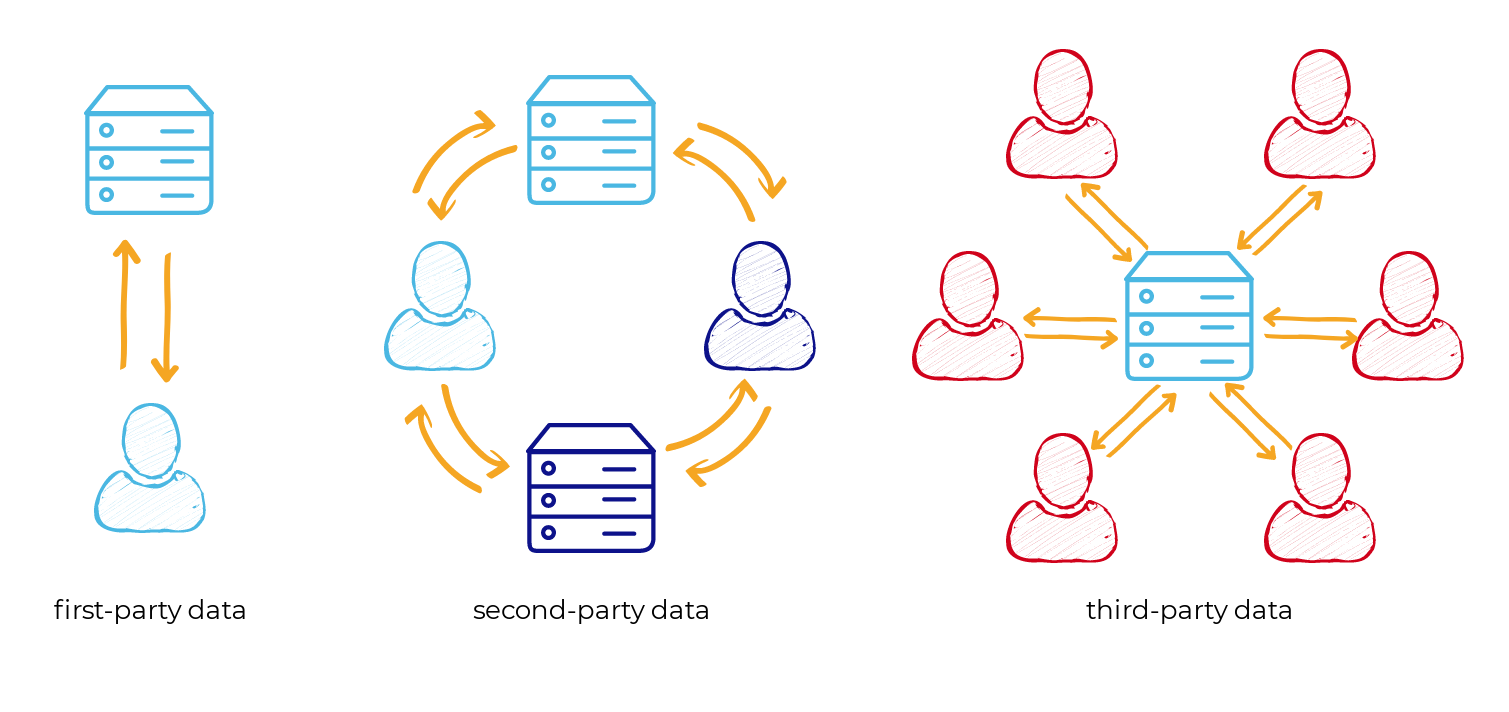
Why does first-party data matter for marketing?
As privacy regulations tighten and browsers restrict third-party cookies, first-party data has become the most reliable basis for targeting and measurement. It enables businesses to build personalized experiences, increase customer trust, and optimize marketing effectiveness—all while ensuring compliance with data privacy laws.
1. Increased Marketing Effectiveness
First-party data is collected directly from real user interactions, making it highly accurate and relevant. Unlike third-party data, which can be outdated or unreliable, first-party data allows businesses to:
Refine audience segmentation – Identify high-intent customers and tailor campaigns accordingly.
Improve ad targeting – Deliver personalized ads based on user behavior instead of relying on broad audience groups.
Enhance customer journey mapping – Track how users interact with different channels to optimize touchpoints.
2. Stronger Customer Trust and Privacy Compliance
Consumers are more aware of data privacy than ever. Brands that rely on transparent data collection methods gain customer trust and comply with GDPR, CCPA, and other privacy regulations.
Gives customers control – Users willingly share their data through sign-ups, subscriptions, and preferences.
Reduces reliance on third-party cookies: keeps targeting working in browsers that block them.
Strengthens brand credibility – Companies that prioritize data security and transparency build stronger relationships.
3. Enables Advanced Personalization and Customer Engagement
First-party data allows for hyper-personalized marketing that increases customer engagement and loyalty. By analyzing past behaviors and preferences, brands can:
Create dynamic email campaigns – Personalize product recommendations and exclusive offers.
Deliver relevant website content – Adjust homepage banners and product suggestions based on user history.
Optimize retargeting strategies – Show ads to users who have interacted with a product but didn’t complete a purchase.
4. Higher ROI and Reduced Marketing Costs
Unlike paid third-party data, first-party data is cost-effective and leads to higher return on investment (ROI). Brands can optimize ad spend by targeting audiences based on real customer insights, rather than purchasing external audience segments.
Reduces wasted ad spend – Avoids targeting irrelevant audiences.
Boosts retention and lifetime value – Personalized experiences encourage repeat purchases.
Improves attribution modeling – Tracks direct customer interactions more accurately than third-party data.
How do you use first-party data in marketing?
Collecting first-party data is only the first step—turning that data into actionable marketing strategies is what drives real business growth. With customer insights from owned channels, businesses can personalize experiences, sharpen audience segments and improve ad performance while staying compliant.
Below are the most effective ways to use first-party data in marketing to enhance engagement and increase conversions.
1. Personalized Marketing Campaigns
First-party data enables hyper-personalization, allowing brands to deliver the right message to the right audience at the right time.
How to Use It:
Send personalized email recommendations based on browsing or purchase history.
Adjust website content dynamically for returning visitors based on past interactions.
Personalize product recommendations in-app or on-site using recommendation models trained on your own data.
2. Advanced Audience Segmentation and Targeting
Segmenting customers based on behavior, demographics, or preferences allows for more precise marketing efforts.
How to Use It:
Create custom audience segments for ad retargeting based on high-intent behaviors.
Divide users into loyal customers, occasional buyers, and at-risk customers to tailor engagement strategies.
Use predictive models to estimate future buying behavior and target accordingly.
3. Optimized Retargeting Without Third-Party Cookies
Because many browsers restrict third-party cookies, first-party data is the most dependable basis for privacy-compliant retargeting.
How to Use It:
Use CRM data to retarget known customers via Google Ads or Meta Ads.
Implement email-based retargeting, where past visitors receive reminders or offers.
Sync first-party data with customer data platforms (CDPs) to retarget across multiple channels.
4. Improving Customer Experience with Personalization
First-party data helps businesses build consistent, customized customer journeys, which supports satisfaction and retention.
How to Use It:
Offer loyalty-based perks based on purchase history and engagement.
Use predictive analytics to anticipate customer needs before they arise.
Send automated customer support responses based on past interactions.
5. Cross-Channel Integration for Omnichannel Marketing
Synchronizing first-party data across multiple platforms ensures a cohesive customer experience across all marketing touchpoints.
How to Use It:
Align messaging across email, SMS, push notifications, and in-app interactions.
Personalize ads based on a user’s past interactions with the website or app.
Use CDPs to merge offline and online data for a full customer view.
First-party data is the foundation of data-driven marketing strategies.
How do you segment and target with first-party data?
Effective marketing hinges on precise segmentation and targeting. By analyzing first-party data, businesses can create detailed customer profiles that enable tailored marketing messages for different audience segments. This strategic approach not only enhances engagement but also boosts conversion rates.
1. Defining Customer Segments
Utilize first-party data to group customers based on various factors, such as:
Demographics: Age, gender, location, and income levels.
Behavioral Data: Purchase history, website interactions, and product usage patterns.
Psychographics: Interests, values, and lifestyle choices.
Engagement Levels: Frequency of interactions, email opens, and loyalty program participation.
By combining these dimensions, you can create detailed buyer personas that reflect the unique characteristics and needs of your customers.
2. Implementing Data-Driven Targeting Strategies
With defined segments, tailor your marketing campaigns to address the specific needs of each group:
Customized Messaging: Develop targeted messages that resonate with each segment’s interests. For example, send budget-friendly offers to price-sensitive customers while promoting premium products to high-value segments.
Personalized Offers: Use purchase history and browsing behavior to create personalized discounts and product recommendations.
Channel-Specific Strategies: Adapt your content for various channels—whether it’s personalized email content, targeted social media ads, or dynamic website experiences—ensuring consistency in messaging across all touchpoints.
3. Using Automation and Analytics
Modern marketing platforms allow you to automate segmentation and targeting efforts:
Marketing Automation Tools: Integrate your CRM and email marketing systems to automatically segment audiences and trigger personalized campaigns.
AI and Machine Learning: Utilize advanced analytics to predict customer behavior and identify high-value segments for proactive engagement.
Continuous Optimization: Regularly analyze campaign performance data and adjust your segmentation strategies to improve targeting precision and ROI.
4. Real-World Example
Consider an online retailer that uses first-party data to segment its customers:
Segment A: Frequent buyers who have high engagement levels receive exclusive early access to new collections and personalized loyalty rewards.
Segment B: Occasional buyers are targeted with re-engagement emails featuring special discounts on products they viewed but didn’t purchase.
Segment C: New visitors are introduced to the brand with a welcome series that highlights top-selling products and customer testimonials.
This targeted approach ensures that each customer segment receives relevant content and offers, ultimately driving higher conversion rates and improved customer satisfaction.
How is first-party data changing as browsers restrict tracking?
Privacy regulations are getting stricter and browsers keep restricting third-party tracking. This shift places first-party data at the center of future marketing strategies, making it essential for businesses to adapt to privacy-first, data-driven approaches.
1. The End of Third-Party Cookies: What It Means for Businesses
Google dropped its plan to phase out third-party cookies in Chrome, but Safari and Firefox block them by default and Apple's App Tracking Transparency limits tracking in iOS apps, so third-party data still leaves gaps. This means:
Less reliance on external data sources for audience targeting.
Greater focus on customer consent and transparency in data collection.
Increased need for businesses to build direct relationships with customers.
Example: Instead of relying on third-party cookie tracking, brands will need to use first-party data from their website, email lists, and CRM systems to drive retargeting and personalization.
2. The Rise of AI and Predictive Analytics in First-Party Data
AI and machine learning will play a critical role in analyzing first-party data, allowing businesses to:
Predict customer behavior based on past interactions.
Automate personalization at scale without third-party cookies.
Improve targeting accuracy using real-time data insights.
Example: A streaming platform uses its own viewing history data to recommend personalized content.
3. Zero-Party Data: A Key Supplement to First-Party Data
To enhance first-party data strategies, brands are increasingly collecting zero-party data, which refers to information proactively shared by customers.
Ways to Collect Zero-Party Data:
Preference-based quizzes – Users voluntarily provide insights for tailored recommendations.
Surveys and polls – Customers share their interests and feedback directly.
Interactive content – Engaging tools like style finders or product configurators.
Example: A fashion retailer offers a “Find Your Perfect Fit” quiz, collecting size and style preferences directly from customers to personalize recommendations.
4. Privacy-First Marketing Strategies for the Future
To stay ahead in a privacy-first world, businesses must:
Invest in Customer Data Platforms (CDPs) – Unify customer data from different touchpoints for a 360-degree customer view.
Use contextual targeting: match ads to the content being viewed rather than tracking past activity.
Build direct customer relationships – Prioritize email, SMS, and loyalty programs to create trusted, owned marketing channels.
Enhance transparency and compliance – Make it easy for customers to understand and control how their data is used.
Example: An online retailer creates a loyalty-based data exchange, offering discounts in exchange for customer preferences, ensuring compliance while gathering valuable first-party data.
The future of marketing is first-party and privacy-first.
Where should you start with first-party data?
As privacy regulations tighten and third-party cookies disappear, businesses must shift toward first-party data strategies to stay competitive. Customer data collected on your own channels improves personalization, targeting and customer relationships while staying within privacy laws.
To succeed in a privacy-first, data-driven world, companies should:
Prioritize first-party and zero-party data collection through websites, apps, CRMs, and loyalty programs.
Invest in AI and automation to analyze data and personalize customer interactions at scale.
Ensure transparency and compliance with GDPR, CCPA, and other regulations to build trust.
Create direct, meaningful relationships with customers through email, SMS, and omnichannel engagement.
Businesses that embrace ethical, privacy-focused first-party data strategies will gain a competitive advantage and drive long-term growth in the evolving digital landscape.
