Marketing results can fluctuate significantly—even if your tactics remain constant—because consumer interests evolve with seasonal cycles and emerging trends. Successful digital marketers and e-commerce managers plan strategically around these predictable behaviors and timely opportunities, using detailed data-driven insights.
Why Trends and Seasonality Matter
Seasonality refers to predictable, repeating behaviors driven by calendar events or market cycles. Examples include increased interest in fitness products in January or gardening supplies in spring. Understanding this prevents misaligned campaigns and inefficient budget usage.
Trends indicate rapidly changing consumer interests, often driven by social, cultural, or market influences. Unlike seasonality, trends appear quickly and require agile responses.
Combining both provides precision in timing, targeted messaging, and smarter budget management.
Deep-Dive: Planning Campaigns Around Seasonality
Actionable Steps:
1)Detailed Historical Data Analysis
Examine multi-year website traffic, conversion rates, search volumes (from Google Keyword Planner), and transactional data to identify seasonal peaks and nuances.
Example: Historical data shows a 30% increase in search volume for cold tea starting in May. By launching campaigns in early May, both website traffic and conversion rates are likely to increase, as the products align with rising consumer demand ahead of the summer season. Additionally, starting the campaign early helps capture sales before peak season, optimizing marketing budget allocation and driving higher sales.
2) Identify Precise Timings and Behaviors
Instead of general assumptions, pinpoint exact dates or weeks when behaviors shift significantly.
Example: Search volume for "back-to-school supplies" rises by 40% starting in early July and peaks in mid-August. By targeting the campaign specifically during the first week of August, when the search volume peaks, advertisers can increase conversion rates (CVR) and reduce cost-per-click (CPC) by focusing on highly relevant consumer intent. This approach ensures that the ads are shown to the right audience at the right time, maximizing the efficiency of the ad spend.
3) Customize Messaging and Creative
Tailor ads to seasonal nuances: e.g., use spring pastel colors and outdoor scenes in spring-related campaigns, reflecting increased search volumes for outdoor furniture or gardening.
Example: A digital marketer notices a surge in search interest for outdoor grills in early May. Instead of generic "summer promotions," they launch campaigns in late April with warm-weather visuals and trending colors like coral. The message "Be Grill-Ready Before Summer Arrives" taps into early demand, positioning the brand as timely and relevant, increasing engagement and conversion.
Transforming Trends into Immediate Action
Quick identification of emerging trends through behavioral data (Google Trends, search volume analysis) allows rapid adaptation:
Monitor significant spikes in searches or social buzz around specific products or themes.
Immediately update ads, content, or product pages to reflect these rising interests.
Test new creatives quickly, using trend-specific messaging and visuals to maximize relevancy, while monitoring creative performance.
Example: An e-commerce manager identifies an unexpected surge in searches for "home espresso machines." Quickly responding, they update their homepage, create targeted ads featuring trending models, and optimize SEO with keyword-focused blog content ("Top 5 Espresso Machines for Home Baristas"), capturing early demand.
Integrating Seasonality and Trends Strategically
Successful campaigns blend predictable seasonal insights with agile trend responsiveness:
Timing Synergy: Align product launches or promotions precisely when seasonal and trend-driven interests intersect.
Creative Optimization: Merge seasonal aesthetics (colors, imagery) with current trending elements (e.g., influencer endorsements, trending product features).
Proactive Budgeting: Allocate higher ad spend strategically at moments when peak seasonal and trend interests overlap.
Real-time Adjustments: Leverage automated tools like Orphex to alert marketers when significant seasonal or trend shifts occur.
Bringing Insights into Execution Across Channels
Applying these insights effectively requires targeted actions in each marketing channel. Below are detailed strategies to help marketers immediately improve their campaigns:
Paid Advertising:
Effective paid advertising leverages real-time insights to maximize returns. This means:
Increasing spend during peak seasonal and trending periods.
Immediately integrating visuals or colors trending in consumer searches (e.g., highlighting “Spring 2025’s Trending Lavender Apparel”).
Rapidly adding seasonal or trending keywords, while pausing less relevant terms to ensure budgets are efficiently used.
Continuously performing A/B testing on creatives informed by behavioral analytics.
Using an audience insights tool to segment remarketing audiences based on seasonal or trending interests for more precise targeting.
If ad platform data shows your CTR has dropped after the seasonal peak, refresh creatives and reduce bids to protect ROAS while maintaining impression share.
SEO and Content:
For maximum SEO effectiveness, marketers must proactively plan and react swiftly to changing consumer behavior:
Publish seasonal content based on search volume data at least 4-6 weeks before peak periods.
Quickly update existing content to incorporate new, trending keywords and topics.
Create dedicated landing pages optimized with a combination of seasonal and trending keywords, driving high-intent traffic.
Regularly use insights to identify new long-tail keywords, enhancing your visibility and relevance.
If search volume for a seasonal keyword starts declining post-peak, update title tags and meta descriptions to reflect the next upcoming intent. This keeps your content relevant and maintains rankings without rebuilding new pages.
Social Media:
Social media channels benefit significantly from immediate, real-time responsiveness to trends and seasonal changes:
Rapidly adjust content calendars based on trending hashtags and topics identified through social listening.
Leverage user-generated content (UGC) reflecting current trends for authenticity and higher engagement.
Collaborate with influencers or creators aligned with seasonal or trending topics, amplifying campaign effectiveness.
If your engagement rate on planned content begins dropping while trending hashtags in your industry are rising, pause low-performing posts and adjust your calendar to include more reactive, real-time content. This helps regain visibility in platform algorithms.
By strategically applying these detailed insights across each channel, marketers can significantly enhance campaign performance, efficiency, and consumer relevance.
Early-Stage Proactive Strategies
Identify Early Signals: Use Google Trends to detect growing interests before competitors notice.
Recent keyword analysis and historical data indicate a noticeable increase in interest for airy linen dresses well before the holiday season and spring season arrive. This early surge in searches points to a rising demand for lightweight, natural fabrics as these key periods approach. By recognizing these trends ahead of time, you can strategically plan and launch campaigns that tap into the growing interest before the peak season hits.
Unified Marketing Calendar: Align your digital ads, email campaigns, SEO content, and social media posts to deliver unified messaging based on seasonal and trending insights.
Performance data highlighting a spike in ROAS during a specific week in spring signals an opportunity to replicate the same strategy the following year. Aligning paid ads, SEO content, email flows, and influencer posts within one unified window reinforces your message and amplifies brand impact across all touchpoints.
Automated Real-Time Responses: Set up triggered actions (emails, remarketing ads) based on real-time data indicating changes in consumer interest or seasonal timing.
When engagement with seasonal items like winter accessories starts increasing—often visible through click heatmaps or product page views—it’s a clear signal to take action. Rather than launching campaigns manually, having automated responses ready helps you respond instantly to rising interest. A well-timed and relevant interaction can make all the difference in turning browsing into conversions.
Overcoming Challenges for Digital Marketers
Navigating Data Complexity:
Streamline data analysis with centralized dashboards highlighting key behavior signals from search and transactional data.
Focus specifically on actionable insights (search volume shifts, seasonal product engagement) using product performance analysis software.
Balancing Short-term Wins and Long-term Growth:
Quickly pivot campaigns based on immediate trends while maintaining a strategic foundation informed by historical data.
Ensure flexibility in ad budgets and messaging templates to adapt quickly without extensive internal approval.
Managing Cross-Channel Integration:
Utilize marketing insight software like Orphex, combining behavioral insights (Google Trends, search volumes) with transactional and performance data.
Foster collaboration through regular cross-departmental strategy sessions based on shared data insights.
Before You Go — A Marketer's Cheat Sheet
Here are five key principles to remember:
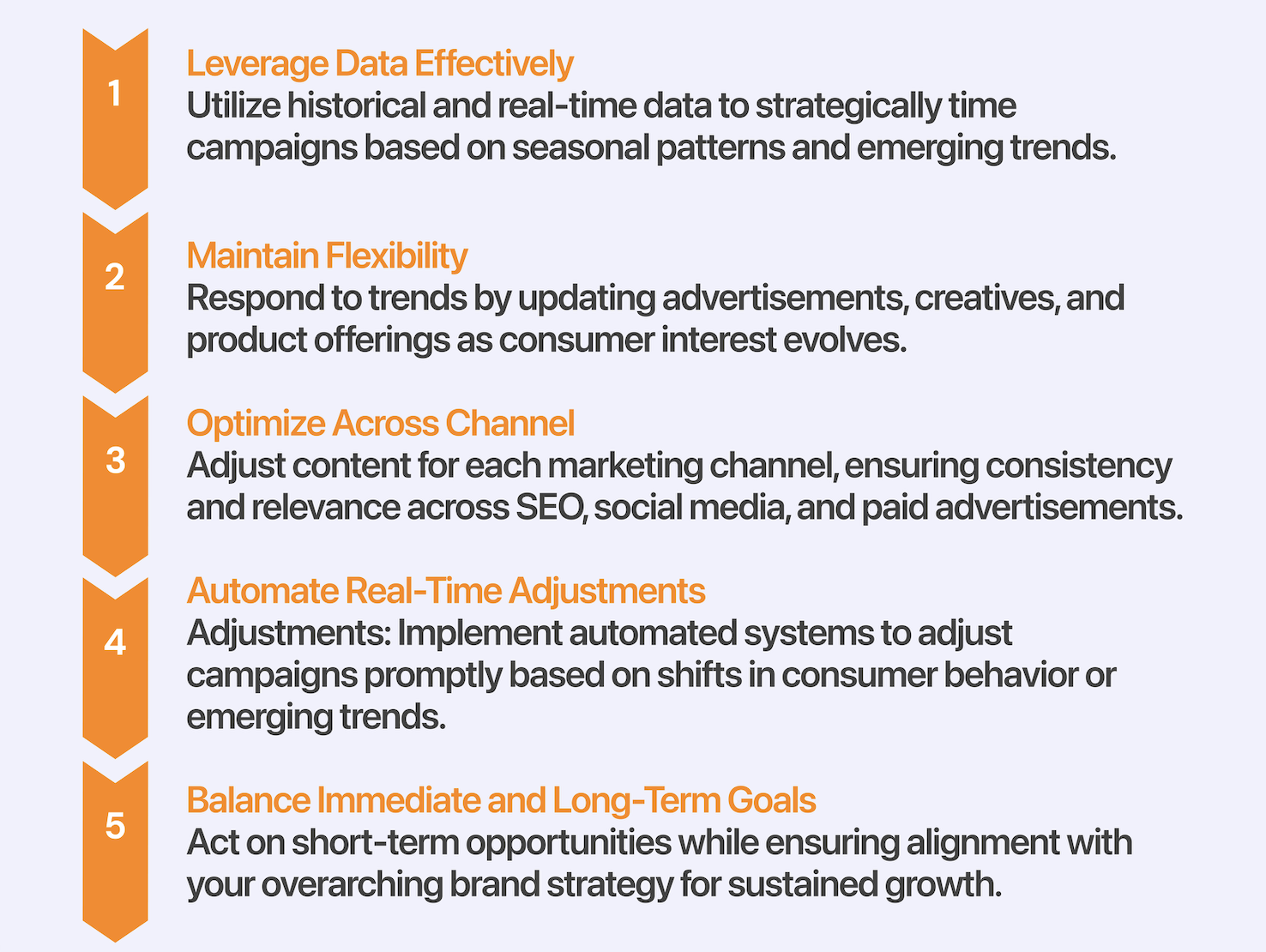
Orphex empowers you to merge seasonality patterns and trend signals into a single, actionable strategy — enabling you to adapt in real time, not just react. By harnessing predictable cycles alongside emerging market dynamics, you can optimize campaign timing, allocate budgets intelligently, and craft messages that resonate.
