A performance marketing platform is a category of software that makes it easier to track the budget, performance, and creative results of campaigns where ad spend is tied directly to measurable outcomes, all through a centralized dashboard. This need is even more pronounced for ecommerce brands, since budget and performance data for campaigns running simultaneously on platforms such as Google, Meta, TikTok, and Amazon Ads become harder to track once they are spread across separate panels.
In this article, we explain what a performance marketing platform is, why it matters for ecommerce brands, and what to look for when choosing the right one. We also walk through a sample scenario showing how these tools support day-to-day workflows.
What Is a Performance Marketing Platform?
Performance marketing is an approach where a brand manages ad spend based on measurable outcomes such as clicks, conversions, or sales. Under this approach, the budget, spend, and performance of every campaign are tracked closely, because the goal is to see clearly which campaigns and platforms deliver stronger performance signals for the budget spent.
A performance marketing platform is the software solution that makes this tracking easier. It makes campaign budget, platform-level performance, and creative results visible, and helps move reporting workflows into a more automated structure. Some platforms focus on a single advertising platform, while others aim to make data from multiple connected accounts visible on a centralized dashboard.
Why Performance Marketing Is So Critical in Ecommerce?
For ecommerce brands, ad budget is no longer concentrated in a single channel. According to Statista, digital retail media ad spend in the United States is expected to reach approximately 69.3 billion dollars in 2026, marking growth of close to 18 percent over the previous year. This growth shows that ecommerce brands are now allocating budget not only to platforms such as Google and Meta, but also to newer channels such as retail media.
As the number of platforms grows, evaluating campaign performance on a comparative basis becomes harder too. If an ecommerce brand cannot quickly see which platform, campaign, or creative delivers a stronger performance signal, budget usage may become less efficient and optimization decisions may be delayed. This is exactly where the need for an ecommerce-focused performance marketing platform comes in.
Which Problems Does a Performance Marketing Platform Solve?
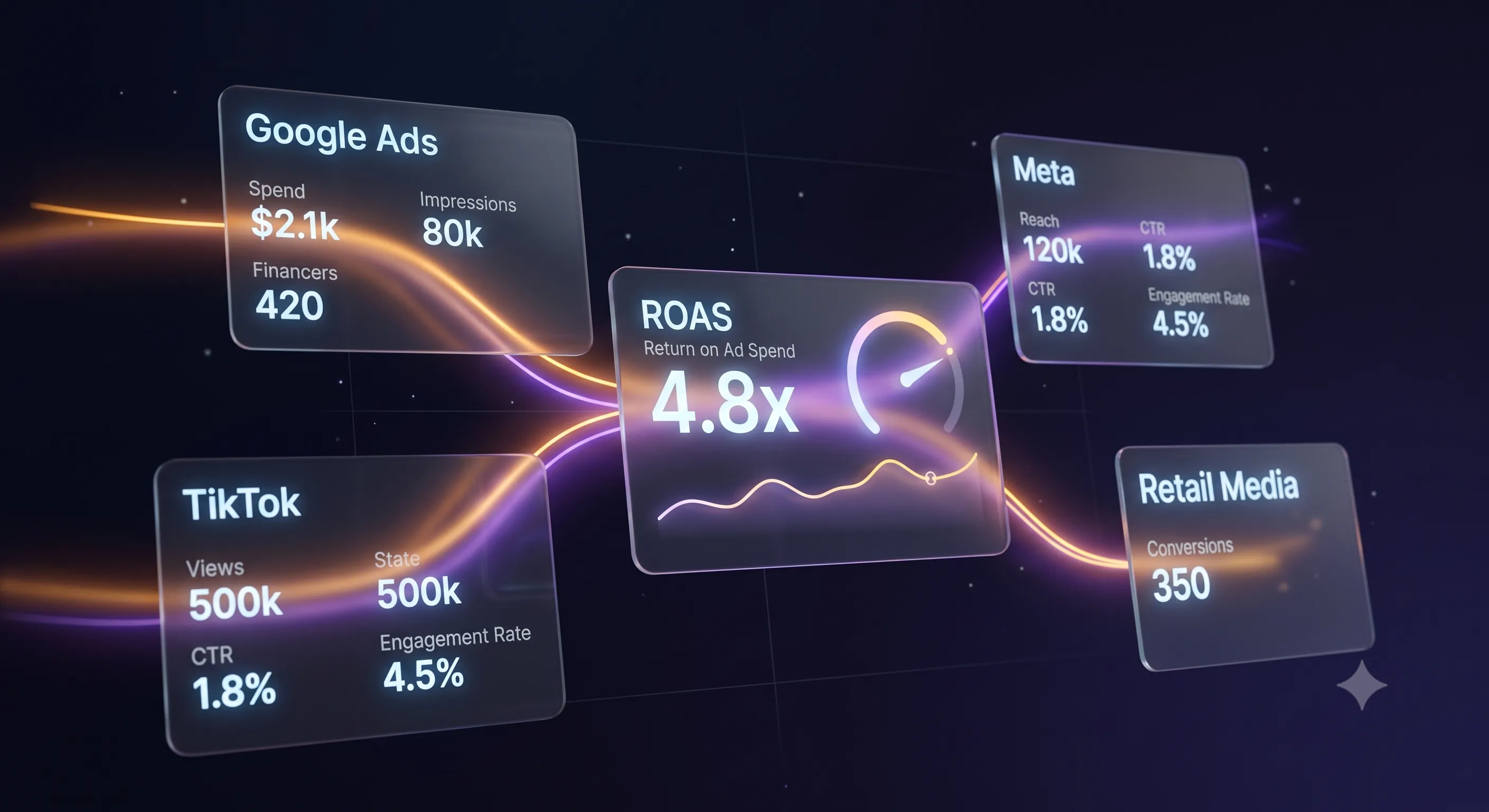
Ecommerce teams face a common problem during the day. Pulling budget data from the Google Ads panel, getting campaign performance from Meta Ads Manager, checking the creative results of product ads on TikTok, and combining all of it into a single report can take hours. As the number of campaigns grows, this process becomes even more time consuming.
This is where an online marketing platform such as Orphex comes in, making campaign, budget, and creative performance data from connected advertising platforms visible on a single dashboard. Teams can track through a centralized dashboard which platform, campaign, or creative delivers a stronger performance signal, and move their reporting workflows into a more automated structure.
Performance marketing platform generally solve the following problems for ecommerce brands.
Campaign-based budget tracking being scattered across platforms
Creative performance of product ads being tracked separately
Cross-platform performance comparison taking too much time
Weekly or monthly reporting processes being manual and error-prone
Which Metrics Should You Track with a Performance Marketing Platform in Ecommerce?
Evaluating ecommerce performance accurately takes more than looking at click volume or total sales. Budget usage, campaign performance, ROAS, CPA, AOV, conversion rate, and creative performance signals, read together, give a much clearer picture of how a campaign is actually doing. No single metric on its own explains why a campaign is performing well or poorly.
An ecommerce-focused performance marketing platform helps prevent these metrics from staying scattered across different advertising platforms. For example, an online marketing platform such as Orphex makes campaign, budget, and creative performance data from connected advertising platforms visible on a centralized dashboard. This lets teams read these metrics across platforms on a more comparative basis and evaluate optimization decisions more effectively.
Metric | Why It Matters for Ecommerce |
ROAS | Helps evaluate how much revenue is generated in return for ad spend. |
CPA | Shows the average cost required to generate one conversion. |
AOV | Shows the average order value per purchase. |
Conversion rate | Shows what percentage of ad traffic turns into a purchase or target action. |
Budget pacing | Helps track whether budget is being spent at the planned rate. |
Creative performance | Helps identify which product visuals, videos, or messages generate stronger performance signals. |
What to Look for When Choosing a Performance Marketing Platform for Ecommerce?
Choosing the right performance marketing platform for ecommerce takes more than looking at the most popular tools. The first thing to check is whether the platform integrates with advertising platforms such as Google Ads, Meta, TikTok, and Amazon Ads, and whether it can support multiple connected accounts at the same time.
Beyond that, features such as budget visibility, creative performance tracking, and reporting automation play a decisive role in the decision. What matters for ecommerce teams is not just access to data, but being able to read campaign, budget, and creative performance on a comparative basis. The table below summarizes the key criteria to evaluate when choosing a performance marketing platform.
Criterion | Why It Matters |
Number of connected platforms | Lets you view all platforms, such as Google, Meta, TikTok, and Amazon Ads, on a single dashboard |
Budget visibility | Supports more consistent tracking of spend against plan |
Creative performance tracking | Helps you see which product visual or video ad delivers a stronger performance signal |
Reporting automation | Shortens manual data collection and reduces the margin of error |
Who Needs a Performance Marketing Platform?
For marketing teams, a performance marketing platform is a practical tool that simplifies day-to-day campaign tracking. Instead of logging into different platforms one by one, being able to track budget status, campaign performance, and creative results through a centralized dashboard frees up more time for optimization.
For managers and directors, the need is shaped more around high-level visibility. Especially at agencies managing multiple brands or clients, being able to see budget allocation across platforms from a single place makes the reporting process more efficient.
A Sample Scenario for Viewing E-commerce Budget and Creative Performance on a Centralized Dashboard
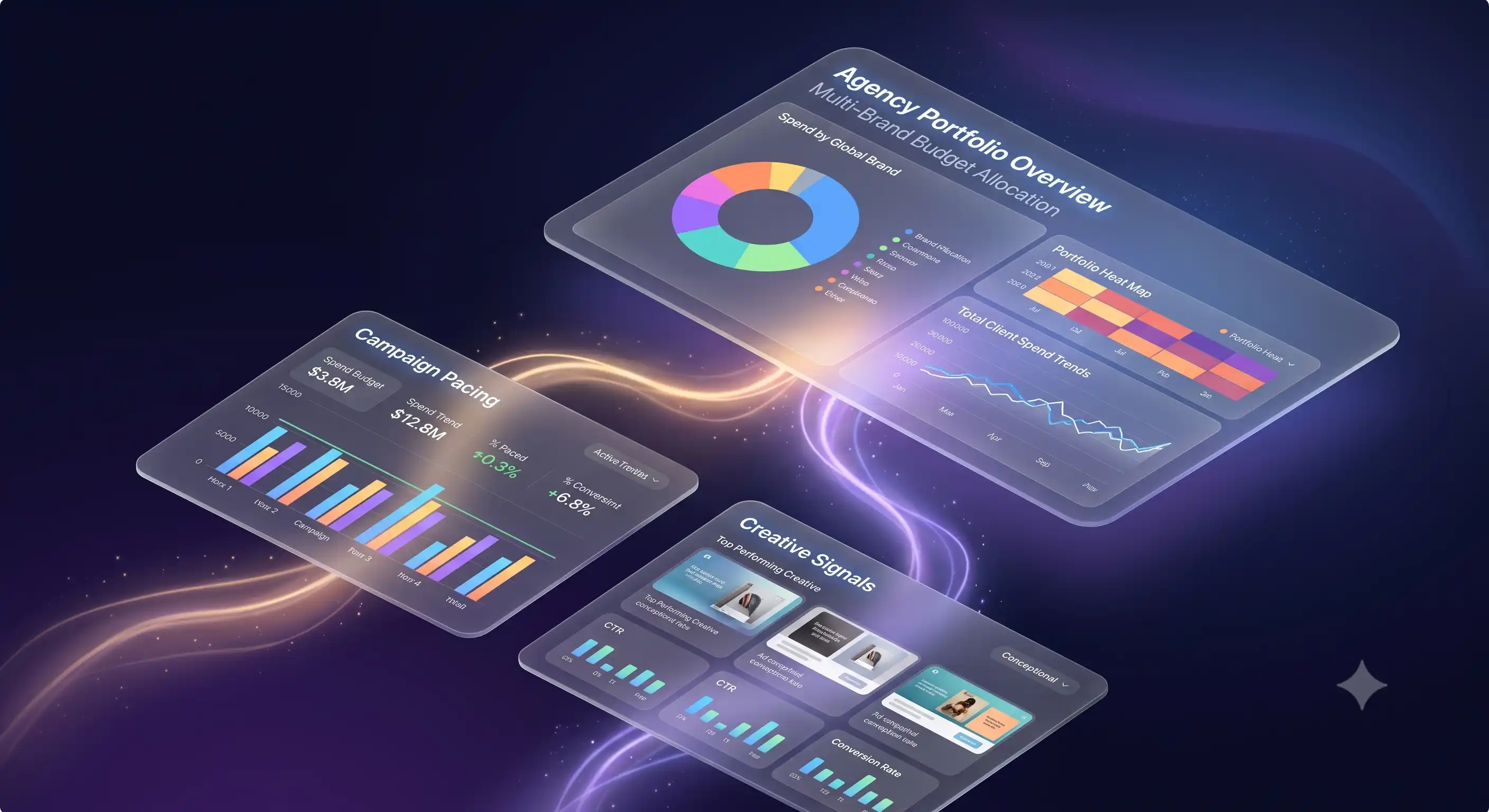
Consider an ecommerce brand running simultaneous product ads on Google, Meta, and TikTok that needs to evaluate its budget allocation at the end of the month. To do this, it first needs to pull data from each platform separately, then compare it in a common format. This process can often take days, during which some of the data may already become outdated.
When an online marketing platform such as Orphex is used, campaign, budget, and creative performance data from connected accounts becomes visible on a single dashboard, and optimization suggestions can be surfaced based on performance signals. This way, instead of spending time bringing data together, the team can evaluate budget usage, campaign performance, and creative signals together, and focus on optimization decisions.
Frequently Asked Questions
What is a performance marketing platform?
A performance marketing platform is a category of software that makes it easier to track the budget, performance, and creative results of campaigns where ad spend is tied to measurable outcomes, through a centralized dashboard.
These platforms help teams evaluate campaign data from different advertising platforms on a more comparative basis, instead of checking each one separately. This allows budget usage, campaign performance, and creative signals to be tracked more consistently.
Is a performance marketing platform for ecommerce different from other tools?
Ecommerce-focused platforms differ from general performance marketing tools in that they offer a structure that fits more closely with the day-to-day campaign needs of ecommerce teams. Being able to track metrics such as product ads, campaign-based budget usage, ROAS, CPA, AOV, and creative performance signals together becomes important here.
The core goal remains tracking campaign performance and evaluating ad spend more efficiently. But as the number of campaigns, product variety, and platforms grows on the ecommerce side, tracking this data separately becomes harder. This is why a performance marketing platform built for ecommerce helps teams read budget, campaign, and creative performance on a more comparative basis.
Which advertising platforms does a performance marketing platform support?
The advertising platforms supported by performance marketing platform can vary from tool to tool. Most tools integrate with commonly used advertising platforms such as Google Ads, Meta, TikTok, and Amazon Ads.
For ecommerce brands, what matters here is not just the number of platforms. The advertising accounts a team actively uses, along with campaign data, budget information, and creative performance signals, need to be tracked within the same structure. This is why, when choosing a platform, it is just as important to look at how comparably this data is presented as it is to look at which advertising platforms are supported.
Does a performance marketing platform provide attribution data?
The main purpose of performance marketing platforms is not to provide attribution modeling. These tools generally focus on platform, campaign, budget, and creative performance visibility. In other words, they help teams see more clearly which campaign on which platform delivers a stronger performance signal, how budget is being used, and how creatives are performing.
Attribution is a separate measurement area that models how a sale relates to different ads, channels, or touchpoints. Orphex's core positioning is not attribution, but making campaign, budget, and creative data from connected advertising platforms visible in a centralized dashboard.
Is a performance marketing platform necessary for small ecommerce brands?
For ecommerce brands running small-budget campaigns on a single platform, a performance marketing platform may not always be necessary. At this stage, the platform's own panel and simple reporting methods are often enough.
But once campaigns spread across two or more advertising platforms, the picture changes. Tracking budget, campaign performance, and creative results separately across platforms such as Google Ads, Meta, TikTok, or Amazon Ads becomes harder. At this point, the need for centralized visibility grows quickly, and a performance marketing platform helps teams read the data on a more comparative basis.
